Showing posts with label technology & medicine. Show all posts

Friday, November 18, 2016

Health Ministry warns against overuse of antibiotics | Arab News


 RIYADH: The Ministry of Health has carried out a week long awareness
campaign on the careful use of antibiotics under the slogan
“Antibiotics: Handle with Care.”

The activities of the World
Antibiotic Awareness Week were organized by the Ministry of Health (MoH)
in collaboration with the Ministry of Environment, Water and
Agriculture and the World Health Organization (WHO).


An official from
the Ministry of Health told Arab News that the ministry has started
these activities to raise awareness about bacterial resistance to
antibiotics, as well as encouraging the public, health workers and
policy makers to follow the best practices to avoid the detection of
more cases of antibiotic resistance.......


 read more:

Health Ministry warns against overuse of antibiotics | Arab News

Wednesday, March 30, 2016

Fighting infectious diseases | Arab News


 Combating antimicrobial resistance will require groundbreaking technological solutions. To prevent superbugs from claiming an estimated 10 million lives a year by 2050, we will need to invent new types of antimicrobial drugs and develop rapid diagnostic tests to avoid unnecessary treatment and cut our massive overuse of antibiotics.

And yet, as important as these high-tech contributions may be, they are only partial fixes. To tackle the problem permanently, the only option is to prevent infections from occurring in the first place — with improved hygiene, sanitation and disease surveillance. Indeed, only by focusing on these areas will we lower the demand for new drugs over the long term.

 read more:
Fighting infectious diseases | Arab News

read more articles by the writer Jim O'Neil :
 http://www.arabnews.com/author/Jim%20O'Neill

Saturday, February 6, 2016

Ghada Al-Mutairi — Saudi scientist who changed the concept of surgery - Saudi Gazette


 An ambitious Saudi woman has yet again proved sky is the limit for excellence. Ghada Mutlaq Al-Mutairi, 39, received a $3 million global innovation award from the National Institutes of Health (NIH), the largest organization supporting medical research in the United States, for her invention that changed the way surgical procedures are carried out in the country.

Al-Mutairi, who holds a doctorate in materials chemistry, currently lives in the US. She is a faculty member at the University of California San Diego (UCSD) and director of the Center of Excellence in Nanomedicine.

 read more:

Ghada Al-Mutairi — Saudi scientist who changed the concept of surgery - Saudi Gazette

Friday, February 5, 2016

Sakaka hospital scores a first | Arab News


 A medical team at a hospital in Sakaka successfully conducted the first laparoscopic procedure of its kind in the region by using this modern technique.
The medical team, headed by Dr. Sami Al-Asari at the King Abdul Aziz Specialist Hospital, operated on a 60-year-old Saudi woman to remove a 40cm long stone in her small intestine through laparoscopic surgery.

Laparoscopic surgery is a procedure that uses a thin, lighted tube put through a cut or incision in the abdomen.  Director General of Health Affairs in Al-Jouf Hussein Al-Ruwaidi thanked Al-Asari and his team for their medical achievement.

Talking about the procedure, Al-Asari said that when the patient was brought to the hospital’s emergency department, she was suffering from extreme pain. “The patient also complained of frequent vomiting,” said Al-Asari, also the hospital’s department of surgery head and general and colorectal surgery department consultant.

 read more:

Sakaka hospital scores a first | Arab News

Tuesday, February 2, 2016

‘Designer’ babies possible: ‘Gene editing’ given green light | Arab News


British scientists have been given the go-ahead by the fertility regulator to genetically modify human embryos, BBC has reported. It is the first time a country has considered the DNA-altering technique in embryos and approved it, said the global channel.

The research will take place at the Francis Crick Institute in London and
aims to provide a deeper understanding of the earliest moments of human
life.

 read more:

‘Designer’ babies possible: ‘Gene editing’ given green light | Arab News

Friday, November 27, 2015

Medical app for emergencies soon | Arab News


 RIYADH: Prince Sultan University students will launch an application on
Dec. 9 for emergency medical services, which would link patients with
ambulances.
The app would allow people to share their locations,
determine the time for an ambulance to arrive, and a section to rate the
service for efficiency, according to a statement issued by the
university.
 The launch will take place on the university women’s campus. Hundreds of
students from Princess Nora, Prince Sultan, King Faisal, King Saud and
other local universities are expected to attend.


 read more:

Medical app for emergencies soon | Arab News

Wednesday, November 25, 2015

Patient-Generated Data: How's a Doctor to Interpret It All? medscape.com


Was the EMR Price Tag Worth It?
Eric J. Topol, MD: We have a problem that with the Affordable Care Act, about $40 billion were used to encourage doctors and hospitals to use electronic medical records (EMRs). Was this a good decision, Greg? Where do we stand with the liberation of the data to people?

Sunday, November 15, 2015

New technology beating IVF failure struggles An incipient hope for those who dream to have children- Arab News paper


Source Arab News:

Despite numerous developments in IVF, the implantation rate of the replaced embryos remains low, some infertile patients undergo many IVF cycles and produce embryos, but the embryos consistently fail to implant for unexplained reasons. This is called IVF failure. It is a very frustrating problem for married couples who can’t have children. The chances of successfully conceiving through IVF decline with age, but it remained more successful than natural reproduction that achieved no pregnancy.

If there is an embryo transfer done, the reason that IVF fails is because of HYPERLINK "http://www.advancedfertility.com/implantation.htm"embryo implantation failure. However, we do not know whether the failure to implant was due to a problem with the embryos or a HYPERLINK 

read more......

Tuesday, November 10, 2015

Saudi hospitals first to implant world’s smallest pacemaker | Arab News


 RIYADH: Two Saudi hospitals — King Fahd Armed Forces Hospital (KFAFH)
and Prince Sultan Cardiac Center (PSCC) — have become the first medical
facilities in the world to use the smallest pacemaker.

Dr. Raed Sweidan and Dr. Fayez Boukhari, KFAFH consultant electrophysiologists,
and Dr. Ahmad Al-Fagih and Dr. Khaled Dagriri, PSCC consultant
electrophysiologists, successfully implanted the devices in five
patients. “This new advanced miniaturized technology is highly
favored by patients because of its small size and unique design,”
Al-Fagih told Arab News on Monday.


read more.....

Saudi hospitals first to implant world’s smallest pacemaker | Arab News

Thursday, September 24, 2015

Houston doctor creates impressively accurate symptom checker app - Source abc 13 EYEWITNESS NEWS

Say you're not feeling well, but can't get to the doctor. If you're like a third of adults in the US, you head to the Internet to self-diagnose yourself and feel better. The problem is some of that information is wrong. So, a Houston doctor turned to technology to create an accurate symptom checker that's now gaining national attention.

 When Diane Beasley's youngest child started coughing, she picked up her phone. But not to call her doctor. To answer a series of questions on an app called DocResponse.


Read more.........

Thursday, September 17, 2015

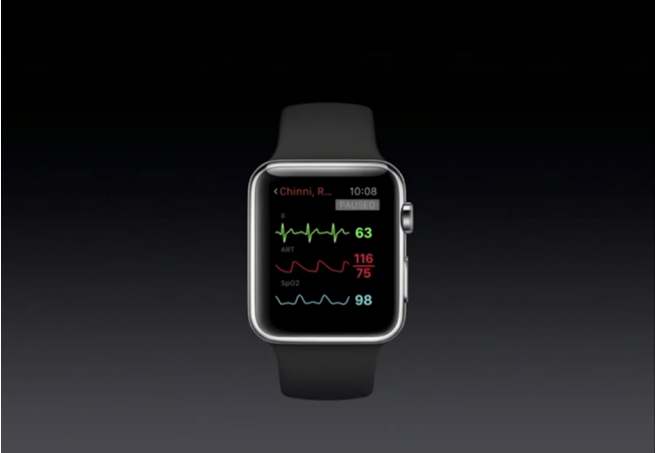
Apple's Airstrip App Could Transform The Care Of Chronic Diseases - Source Popular Science


Apple is aiming to profoundly change the way doctors and patients interact. Last week, the company demonstrated one of its newest medical apps, called AirStrip, which allows doctors to read a patient’s heart rate and other acute health statistics. The app can now be used on the Apple Watch, allowing doctors to view a patient's health information on the go, from their watch, anytime.
While the app is still new and in its early stages, its implications for the healthcare industry could be vast. The founders believe it could help doctors better monitor patients with chronic illnesses--such as heart disease, diabetes, and even COPD--from home. It could also increase the line of communication between doctors and patients, without having the patients make a trip to the hospital.